

Insights – Written by Christina Carstensen~6 min read
Partnerships are increasingly recognised as an important channel for company growth and partner marketers are under more pressure than ever to prove value, scale programs, manage large partner ecosystems and learn & deploy AI whilst doing it.
Despite the focus on the function, partner marketing remains underserved – in research, at events and internally within company’s organisational structure. There are plenty of general marketing conferences and partnership summits but there hasn’t been an event specifically for partner marketers – until now.
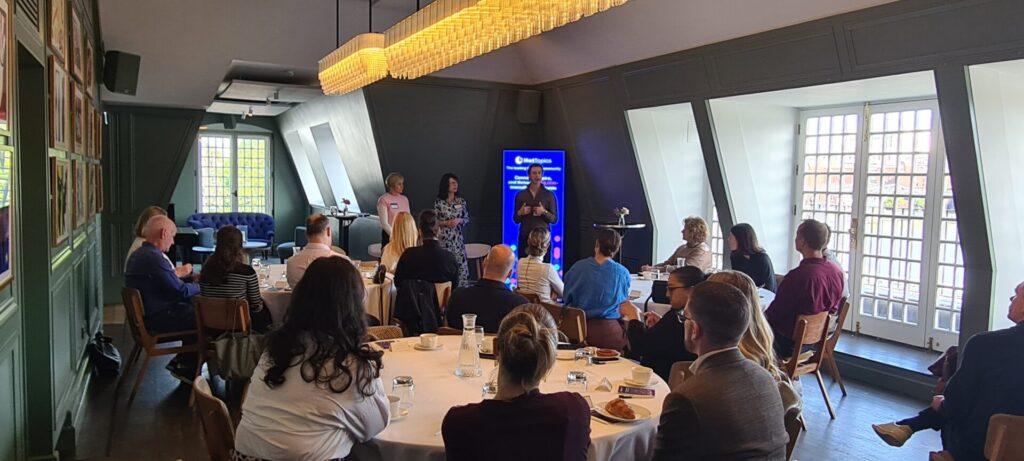
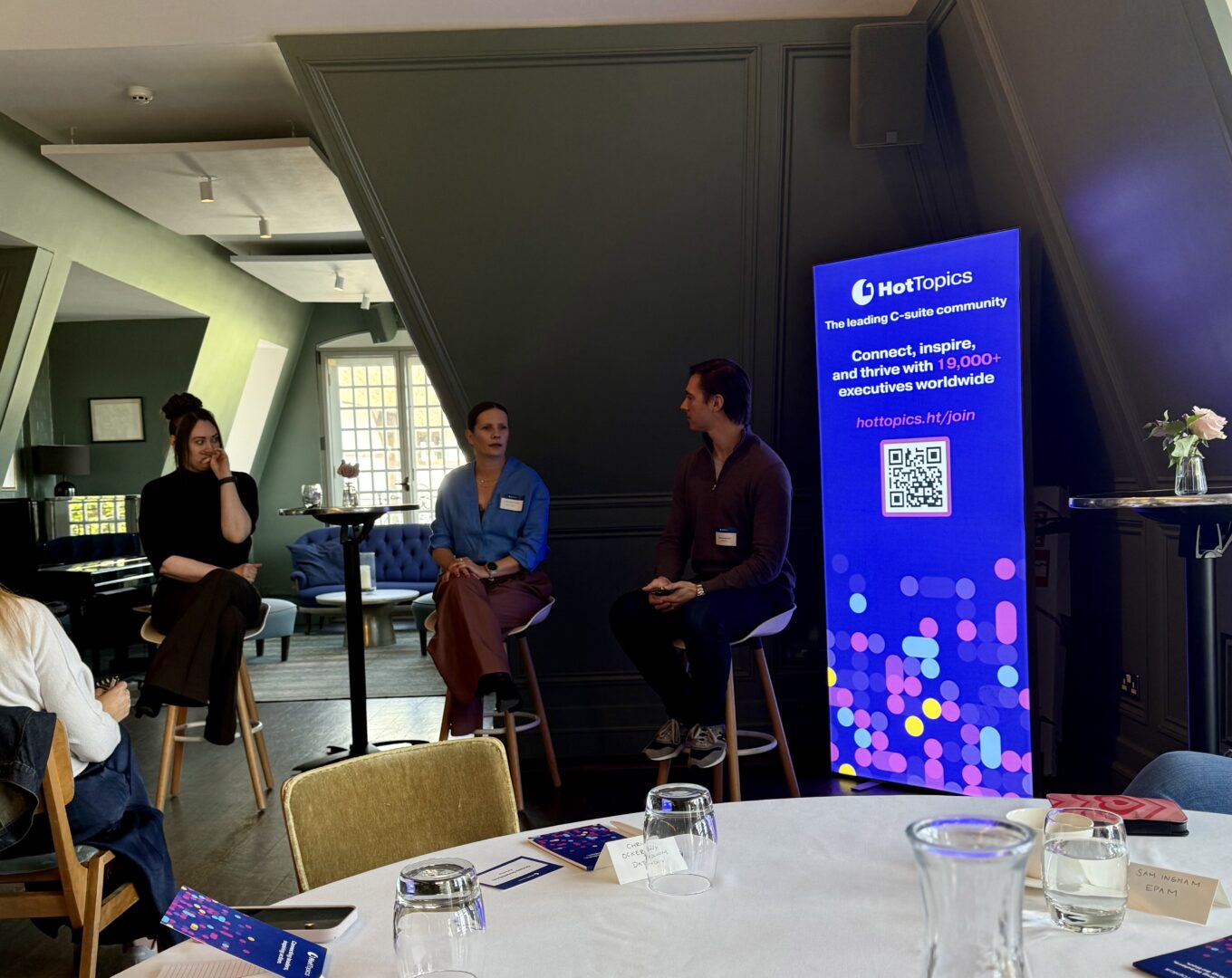
That’s what we set out to change. Aega Partner Marketing, HotTopics and Trusted co-hosted the first dedicated Partner Marketing event in London — a roundtable and panel format that brought together senior partner marketers for a peer-to-peer conversation about what’s really working in 2026 and how to re-write the partner marketing playbook.
Here are the key takeaways:
Partner marketing doesn’t start at execution
A quote from one of our roundtable discussions sparked an interesting debate:
“Partner marketing doesn’t start at execution and MQLs. There’s so much that happens before that: the alignment, the relationship-building, the slow uncovering of opportunity.”
So many organisations still treat partner marketing as a service function that gets involved late in the planning or execution process. When that’s the dynamic, the focus is on campaigns — partner event or webinar activation — when it should really start much earlier with a joint strategy.
Everyone in the room agreed that strong collaboration with the partnerships team and other marketing functions is crucial. Externally, building strong relationships not only with the partner’s marketing team but also with their sales teams will support your joint GTM and deliver higher impact.
Partner marketing is its own discipline. Not a sub-function of marketing or product.
What gets measured — and what gets ignored
Attribution is the conversation that doesn’t go away in partner marketing.
Our attendees agreed that vanity metrics such as lead volume, email open rates or partner portal logins aren’t valuable anymore. But how to measure the real indicators such as the pipeline influence or closed won?
An interesting approach of a strict ‘return on MDF process’ was mentioned where investments are mapped directly to deal registration, influenced opportunity and net new logos. When a partner doesn’t hit the threshold, it triggers a review. That kind of accountability forces both sides to focus on high-intent activity rather than volume of activity.
Where attribution still breaks down: Hyperscaler-driven business, where consumption-based revenue creates a reporting lag that makes it hard to tie marketing influence to outcomes. Another challenge in proving ROI effectively is the integration layer: mismatched tools and partners manually applying (or forgetting to apply) the right campaign tags.
It’s not a solved problem but the organisations making the most progress are those who understand where the gaps are and starting to build workflows as the above to improve visibility.
Scaling co-marketing without losing quality
Another key challenge faced by Partner Marketers is the scaling of partner marketing programs given limited resources on vendor and partner side.
The panel discussed different approaches that they see working: modular, customisable content frameworks that give partners everything they need to execute (whitepapers, event materials, landing pages and email sequences).
Going a step further and providing partner marketing programs with guaranteed outcomes – what we at Aega call turnkey partner marketing programs — that are a light lift for partners and work well for scaling and encouraging partners to run joint activity. A key to success with these turnkey programs: offer flexibility in these programs (e.g. specific audience targeting, joint content instead of just the partner logo on fully formed content) so that the partner feels it is a ‘co-owned’ program and not just another vendor led initiative with a joint logo.
AI can have a significant impact on scalability. Teams were seeing good success in three areas in particular:
- Translation and localisation of joint assets at scale.
- Content customisation for partners who lack the resource to adapt vendor messaging.
- MDF compliance pre-screening, which helps partners access funds quicker and run more joint campaigns. Incorporating both the MDF process and a ‘campaign in the box’ approach in one portal has shown great success.
But AI is not perfect yet — design quality remains a challenge, and large enterprise vendors operate with legacy systems where AI tools still need to be incorporated.
xxxx
Content quality is more important than ever before
The changing buyer journey and what it means for partner marketers creating joint content was another hot topic in the discussions. Buyers are increasingly self-serving — researching through AI tools, communities and peer networks long before they ever speak to sales. That makes the quality and uniqueness of your content more important than ever.
Joint storytelling and a ‘use case’ based approach for partner content was mentioned as being very successful. Partner marketing can be very transactional and not necessarily brand focused but those who lean into a more storytelling & thought leadership approach for their content will see greater success than those who focus on joint solutions briefs and product focused assets.
Quality, the ‘stand out factor’ and strong positioning matter more than ever.
ABM in partner marketing: more than a joint TAL
We didn’t get to fully explore this topic, but it came up in many conversations that day: ABM in partner marketing is playing an increasingly important role, particularly with strategic partners. However, ABM requires teams to come together early — it is much more than just creating a joint TAL.
Beyond account mapping and identification (AI can help here with propensity data, and tools like Crossbeam help to identify an overlap of accounts), partners need to align marketing and sales teams on both sides. They need to work hand in hand to:
- Identify the right accounts
- Create the campaign — which opportunities to win, which use cases to portray
- Personalise the follow-up motion
Campaigns need to be created for the end customer but also for the sales teams to use in a personalised follow-up motion. Smaller pilot programs with selected partners and TALs are recommended.
The relationship question — that AI can’t answer
If there was a single thread running through everything it was this: partner marketing is fundamentally built on human relationships. AI can help with more efficient workflows and scaling activities. A human has to own the alliance.
Partner marketers know that investing in their relationships with partners (marketing and sales teams), understanding how each other work and building trust is what really makes an impact. The hope is that AI will help automate repetitive tasks and allow partner marketers to focus on the more human aspects of their roles: critical thinking, building relationships and creativity.

A final thought
Partner marketers are an underserved group, as far as dedicated events are concerned. That’s part of why we built this one. Partner marketing deserves its own seat at the table. We’re planning to make this event a regular fixture — if you’d like to be part of the next one, get in touch.
Christina Carstensen is the Founder of Aega Partner Marketing, a dedicated partner marketing agency for technology vendors. Follow the Partner Marketing Insights series at aegamarketing.com/insights.